

How to Pick a Power Bank in Nigeria (A reliable One That Survives the Blackouts): 2026

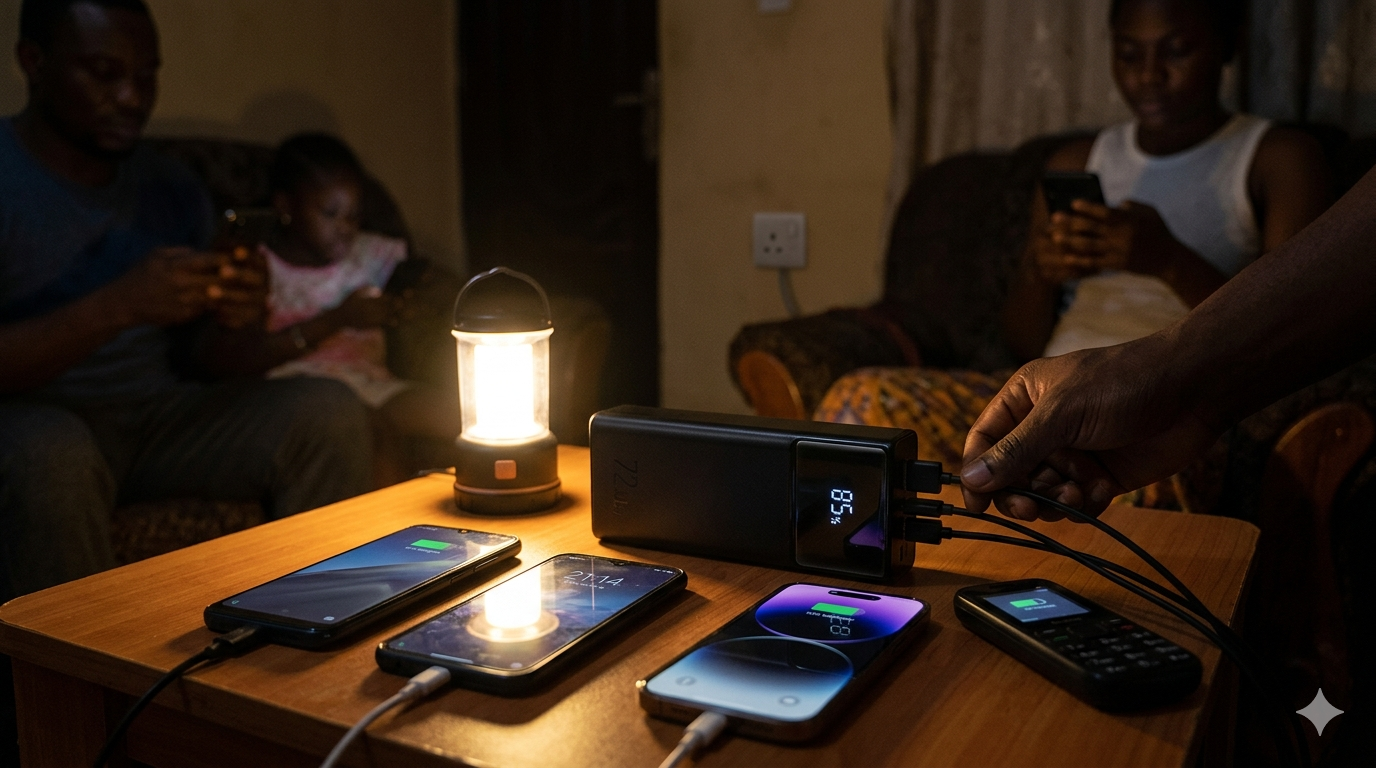
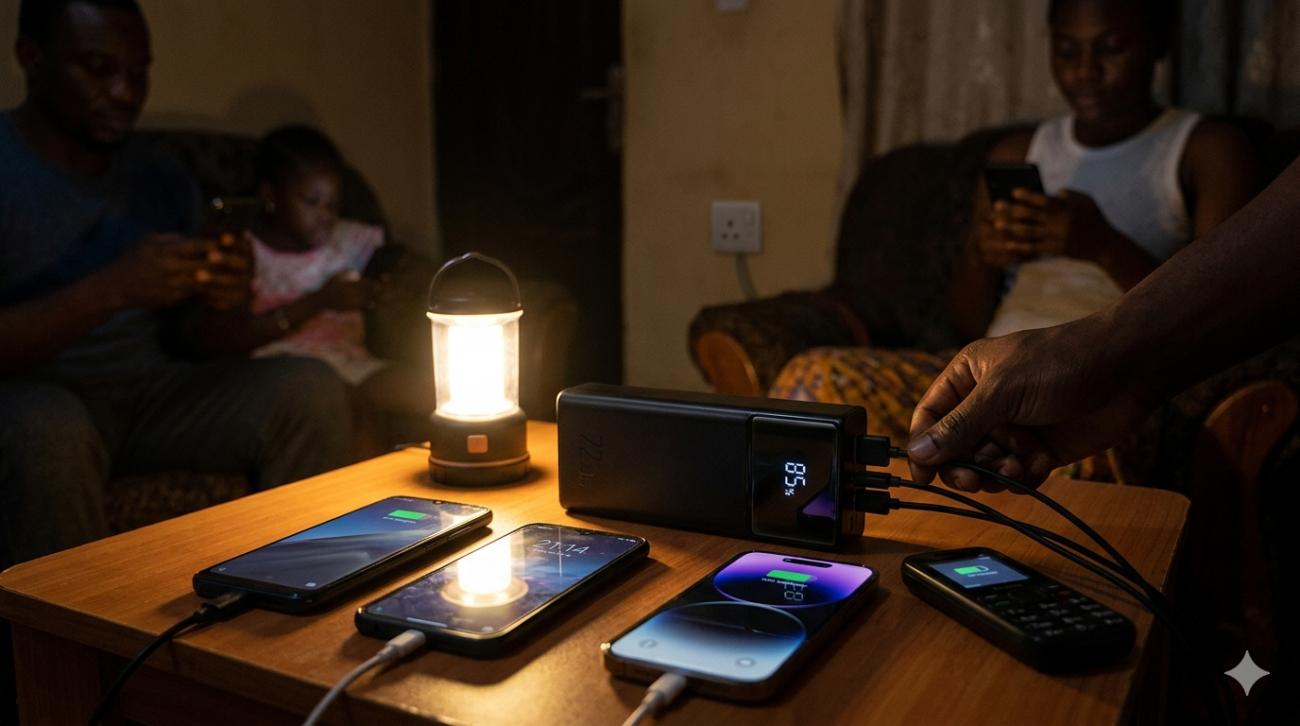
How to Pick a Power Bank in Nigeria. NEPA has taken light. Again. The gen is either resting, out of fuel, or you’d simply rather not burn money on petrol just to charge a phone. Meanwhile your battery is at 14% and someone important is about to call.
If you know that feeling, nobody needs to convince you that you need a power bank. What you actually need is to know how to pick one that won’t disappoint you — because a good half of what’s in the market will.
1. Capacity: how many charges, really
mAh is the big number printed on the front. Treat it with suspicion. A 20,000mAh power bank does not pour 20,000mAh into your phone — energy is lost in conversion, and the rating is measured at a lower voltage than your phone charges at. In real life, expect about 60–70% of the labelled number to actually reach your device.
So, roughly: a 10,000mAh bank gives you about one and a half full phone charges, 20,000mAh about three, and 30,000mAh about five. If light is fairly steady where you stay, 10,000–20,000mAh is enough. If blackouts run long and you’re charging more than one phone, go for 20,000–30,000mAh.
2. Recharge speed: the spec nobody tells you about
Here’s the one almost everyone forgets. People ask how long a power bank lasts. The smarter question in Nigeria is: how fast does it refill?
If light only shows up for two or three hours, a power bank that needs six hours to recharge is useless to you — it will never fill up before NEPA disappears again. Look for a bank with fast input (USB-C, ideally) so you can grab a full charge in the short window you get. A power bank you can’t refill in time is just an expensive paperweight.
3. Output wattage: charge fast, not all night
Capacity is how much. Wattage is how fast. Most phones fast-charge somewhere around 18–30W. A cheap 10W power bank will “charge” your phone slower than you can drain it. Check the output rating — if it supports fast charging (PD, QC, or your phone’s own standard), you top up in minutes instead of hours. That matters when your charging window is short.
4. Ports: one bank, the whole house
When light goes, everybody’s phone is dying at the same time — yours, the children’s, maybe a neighbour’s. A power bank with two or three output ports charges several phones together instead of forcing everyone into a queue. USB-C is the newer, faster standard; a USB-A port handles older cables. More ports, less wahala.
5. Genuine vs. fake: this is where most people lose money
This is the big one. The Nigerian market is flooded with fake power banks — counterfeit “Baseus,” “Anker,” and “Oraimo” units wearing a 30,000mAh sticker with maybe 8,000mAh actually inside. They die within months, charge painfully slowly, and a bad battery cell is a real fire risk in your house.
Protect yourself. Buy from authorised sellers — official brand stores, or verified listings on Jumia and Konga — not a random table at the roadside or a too-good deal in Computer Village. A genuine power bank has proper branding, a clean finish, and a price that makes sense. If a “30,000mAh Baseus” is suspiciously cheap, it is not a 30,000mAh Baseus.
So which one should you buy?
Run the market through that checklist and you want a brand that fast-charges properly, refills quickly, has the ports, and is sold widely by real dealers so you can dodge the fakes. Baseus fits — and for everyday phone users, one model stands out.
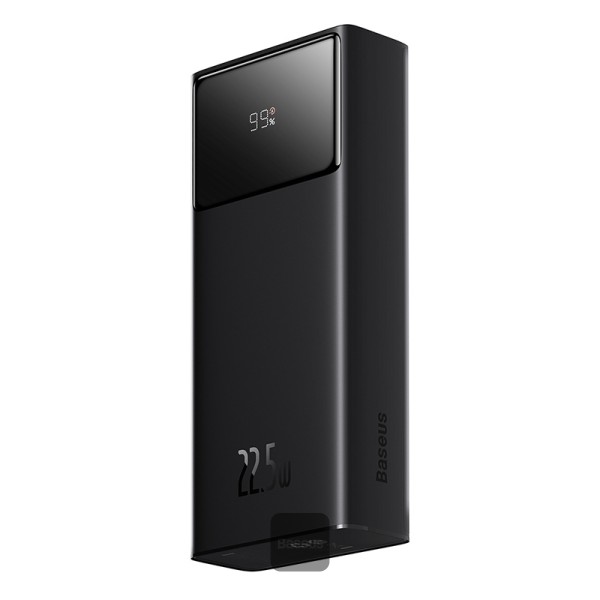
Baseus Star-Lord (30,000mAh, 30W) — the blackout-proof pick. Around five and a half full phone charges. That is days of dead grid before you even think about a wall socket. 30W means proper fast charging, and it powers three devices at once — so the whole family’s phones can survive one long outage. It has a digital display, so you see the exact percentage left instead of squinting at LEDs. Honest note: a 30,000mAh bank takes longer to refill than a small one, so it suits you best if you do get a few hours of light or gen time to top it up. Price: around ₦__40,000__ from authorised sellers — confirm current pricing before publishing.
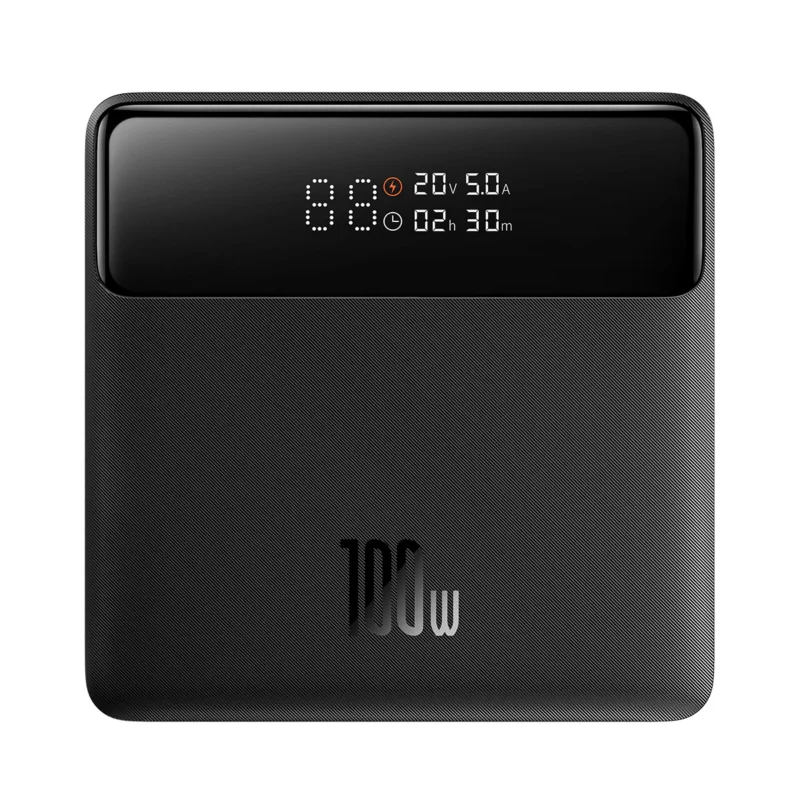
Also worth knowing — Baseus Blade (20,000mAh, 100W). If you also charge a laptop, or your light windows are very short, the Blade refills fast (about 1.5 hours over USB-C) and is slim enough to carry every day. Smaller capacity, but it grabs a full charge in the brief moment NEPA gives you. Price: around ₦_100,000___ from authorised sellers — confirm current pricing before publishing
The bottom line
Don’t buy the biggest number on the sticker. Buy the right combination: enough capacity for how long your light stays off, fast enough to refill in the window you get, enough ports for everyone, and — most important of all — genuine. Get that right and you’ll usually land on a Baseus: the Star-Lord if you’re keeping phones alive through long blackouts, the Blade if you need the fastest possible refill or a laptop top-up.
Buy genuine, charge it the moment light shows, and let NEPA do its worst.
Shop genuine Baseus power banks →
Travelling by air? Power banks must go in your carry-on, never in checked luggage, and very large ones may need airline approval — check with your airline before you fly.
Where to Buy Genuine Baseus Products in Nigeria
One of the biggest risks when shopping for Baseus products in Nigeria is the risk of buying counterfeit items. Always purchase from verified sources:
- Official Baseus Nigeria Website (baseus.com.ng) — safest source with warranty support
- Jumia Nigeria (jumia.com.ng/baseus) — buyer protection and cash on delivery available
- Jiji Nigeria (jiji.ng) — good for deals, but verify seller reputation carefully
- Physical stores in Computer Village (Lagos), Wuse Market (Abuja), and major malls nationwide
💡 Tip: Genuine Baseus products always come with a QR code for authenticity verification. If your product does not have this, it may be a counterfeit.