

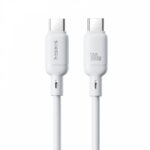

Why Your Phone Charges Slowly in Nigeria (And How to Fix It for Under ₦15,000)


You plug in your phone the moment NEPA brings light. Thirty minutes later, the battery has crawled from 8% to 19%. The power goes out again, and you are stuck.
If your phone charges slowly in Nigeria, it is usually not a phone problem. In most cases, the charger, the cable, or both are the real culprits — and the fix costs less than you think.
Nigeria’s mobile accessories market is projected to hit $4.9 billion, yet most buyers still charge flagship smartphones with the same 5W adapter that came in a box three phones ago. The result is hours of wasted charging time, damaged batteries, and money thrown at replacements that repeat the same mistake.
This guide breaks down why your phone charges slowly, what fast charging means for your specific device, and how to solve the problem for under ₦15,000—with tested products, real naira prices, and only accessories you can buy right now in Nigeria.
4 Reasons Your Phone Charges Slowly in Nigeria
1. Your charger’s wattage is too low
Most phones sold in Nigeria today — iPhone 15, Samsung Galaxy A55, Tecno Camon 30, Infinix Note 40 — support fast charging between 20W and 70W. But many Nigerians still charge with 5W or 10W adapters, either because the phone shipped without a charger (Apple and Samsung stopped including them) or because the original broke and was replaced with a ₦500 no-name unit from the market.
The maths is simple: a 5W charger delivers roughly 1 amp of current. A 20W USB-C PD charger delivers up to 3 amps. That is three times the charging speed from just swapping the adapter.
2. Your cable is throttling your charging speed
This is the silent killer. The cheap ₦500 USB cables sold at Computer Village, Alaba International Market, and roadside stalls across Lagos, Abuja, and Port Harcourt use thin copper wiring with high internal resistance. Even if you plug a 20W charger into the wall, a bad cable can choke the current down to 5W-level speeds.
The difference between a quality USB-C cable rated for 3A/60W and a market cable is the gauge of the copper inside. Thicker copper means lower resistance and more power reaching your phone. This is why your friend’s phone charges faster with what looks like the same setup — their cable is better.
3. Using your phone while charging
Scrolling Instagram, watching TikTok, or running WhatsApp video calls while your phone charges forces the processor to use power while the battery tries to store it. The net charging rate drops dramatically. In Nigeria’s heat, this also raises the phone’s internal temperature, triggering thermal throttling—your phone deliberately slows charging to prevent damage.
The fix: plug in, turn off the screen, and let the phone charge undisturbed. Even 15 minutes of undisturbed fast charging can take you from 10% to 50%.
4. Lagos heat and background apps
Lithium-ion batteries charge most efficiently between 20°C and 30°C. Lagos routinely hits 33°C-35°C, and if your phone is sitting in direct sunlight or on a car dashboard while charging, the battery management system reduces charging speed to protect the cell.
Background apps compound this. GPS tracking, live location sharing on WhatsApp, Spotify streaming, and email sync all generate processor heat. Close unnecessary apps before you plug in, and charge your phone in a shaded, ventilated spot — not under a pillow, not in a pocket.
What Fast Charging Actually Means (And What Your Phone Supports)
Fast charging is not one technology — it is a family of protocols, and your phone only responds to the ones it was built for. Using the wrong protocol means your charger delivers slow, default-speed power, even if the adapter itself can deliver more.
Here are the three protocols that matter for phones sold in Nigeria:
USB Power Delivery (USB PD) is the universal standard. Apple uses it for iPhone 8 and later (including iPhone 15 and 16 with USB-C), Samsung uses it on the Galaxy S and A series, and Google Pixel phones support it. A USB PD charger with 20W or more will fast-charge any of these devices. This is the safest bet if you own multiple phones from different brands.
Qualcomm Quick Charge (QC) is common in older Android phones and some current Xiaomi and Redmi models. QC 3.0 chargers are widely available, but USB PD is replacing the standard in newer devices. If your phone is from 2023 or later, USB PD is almost certainly what it supports.
Tecno, Infinix, and Oppo use proprietary fast charging. The Tecno Camon 30 supports up to 70W, but only with Tecno’s own charger and cable — a generic USB PD charger will charge it at a lower speed (typically 15-18W). Infinix Note 40 supports 45W with its proprietary protocol. For these phones, the charger and cable that came in the box matter.
What your specific phone actually supports
| Phone | Max Charging Speed | Protocol | What Charger to Buy |
|---|---|---|---|
| iPhone 15 / 16 | 27-30W | USB PD | Any 20W+ USB-C PD charger |
| iPhone 13 / 14 | 20-27W | USB PD | Any 20W+ USB-C PD charger |
| Samsung Galaxy S24 / S25 | 25-45W | USB PD + PPS | 25W+ USB PD charger (PPS for full speed) |
| Samsung Galaxy A55 / A35 | 25W | USB PD | Any 25W+ USB-C PD charger |
| Tecno Camon 30 | 70W | Proprietary | Tecno’s own charger + cable (USB PD gives ~18W) |
| Infinix Note 40 | 45W | Proprietary | Infinix’s own charger (USB PD gives ~15W) |
| Xiaomi Redmi Note 13 | 33W | QC / USB PD | 33W+ QC or USB PD charger |
The key takeaway: if you use an iPhone or Samsung, a single 20W USB-C PD charger solves your slow charging problem across all your devices. If you use Tecno or Infinix, protect the charger that came in the box — replacing it with a generic one will cut your speed.
How to Fix Slow Charging for Under ₦15,000
The fix is not complicated. In most cases, you need two things: a charger with the right wattage and a cable that will not throttle it. Here are specific products you can buy in Nigeria right now, with verified prices.
For iPhone and Samsung users: Baseus Palm Fast Charger 20W
This compact UK-plug wall charger delivers 20W through USB-C Power Delivery — enough to take an iPhone 15 from 0% to 50% in about 30 minutes. It also fast-charges Samsung Galaxy A and S series phones at their rated speeds.
An 8-layer smart protection system guards against overcharging and overheating. Three options on baseus.com.ng right now:
Price: Baseus Palm 20W PD Type-C Fast Charger — ₦8,900 (charger only, USB-C output, UK plug).
Baseus Palm 20W + Lightning Cable bundle — ₦11,900 (was ₦15,000, includes 1m Type-C to Lightning cable — ready for iPhone out of the box).
Baseus GaN5 Mini 1C 20W — ₦12,900 (GaN technology, ultra-compact 49.6×44×40mm body).
Buy it: baseus.com.ng — nationwide delivery across Nigeria.
For laptop and multi-device users: Baseus 65W GaN Charger
If you work remotely or run a business, this is the charger that replaces everything in your bag. Three ports (2× USB-C + 1× USB-A) let you fast-charge a MacBook Air, your phone, and your earbuds from one adapter. Ships with a 1m Type-C to Type-C 100W cable included — all from one adapter with multiple ports.
GaN technology runs cooler than traditional silicon chargers, which matters in Nigeria’s heat. Supports USB PD 3.0, QC 3.0, and PPS. BCT smart temperature control and 9 built-in protections — covering virtually every phone and laptop protocol.
Price: ₦34,900 (was ₦40,000) — UK plug, includes 100W cable. Also available: Baseus PowerCombo GaN5 Pro 65W Digital Power Strip at ₦36,900 — adds 3 AC outlets and a 1.5m retractable Type-C cable for desk or bedside setup.
Buy it: baseus.com.ng — nationwide delivery across Nigeria.
The cable matters just as much: stop using ₦500 market cables
A charger is only as good as the cable connecting it to your phone. If you spend ₦12,000 on a quality charger and plug it in with a ₦500 cable from Alaba Market, you have wasted your money.
What to look for in a cable:
- USB-C to USB-C for iPhone 15/16 and most modern Android phones
- Rated for at least 60W / 3A — this is printed on quality cables but absent from cheap ones
- Nylon braided or thick rubber jacket — thin, flimsy cables almost always have thin internal copper
- Brand-name with verifiable origin — Baseus, Anker, and Apple cables all meet the standard; unbranded cables rarely do
The Baseus Dura Series USB-C to USB-C 240W Fast Charging Cable and Baseus Superior Series cables are available on baseus.com.ng. For iPhone users, the Palm 20W + Lightning cable bundle at ₦11,900 solves both problems in one purchase.
The total cost of fixing slow charging: a 20W charger (₦11,900 with cable) solves the problem for most Nigerians. Even the premium 65W setup (₦34,900) is a one-time investment that replaces multiple chargers and lasts years.
When There Is No Light at All: Power Bank Solutions
Charger upgrades only work when NEPA cooperates. For the hours — sometimes days — when there is no power supply, a quality power bank is not a luxury. It is infrastructure.
The same rules apply here: wattage, cable quality, and capacity determine whether your power bank is genuinely useful or just dead weight in your bag.
What to look for in a power bank for Nigeria
Capacity: 10,000mAh charges most smartphones 1.5 to 2 times. 20,000mAh gives you 3 to 4 full charges — enough to survive a weekend blackout. 30,000mAh covers extended outages and can support a laptop.
Output wattage: a power bank with 20W or higher output will fast-charge your phone just like a wall charger would. Below 10W, you are back to slow charging even with a full power bank.
Input wattage (how fast the power bank itself recharges): this matters in Nigeria because your window of power supply may be short. A power bank with 18W+ input can refill from empty in 3-4 hours. A 5W-input power bank takes 10-12 hours — and if NEPA cuts after 6, you have a half-charged backup.
Recommended: Baseus power banks available in Nigeria
Baseus Bipow Pro 10,000mAh 20W — the everyday carry for ₦15,900 (was ₦20,000). 20W fast charging via USB-C PD, digital LED display showing exact battery percentage, matte anti-fingerprint finish. Charges your smartphone 2-3 times. Includes USB to Type-C cable. Rated 5/5 on baseus.com.ng. Ideal for daily commutes on BRT, keke, or Danfo.
Budget option: Baseus Airpow Air Lite 10,000mAh 12W at ₦9,900 (was ₦13,900) — lighter, lower output, still charges via USB-C and USB-A.
Baseus Star-Lord 30,000mAh 30W — the workhorse for ₦44,900. 30W PD fast charging (QC, PD, SCP, FCP, AFC protocols), digital display, triple output to charge 3 devices at once. Includes USB to Type-C cable. Enough capacity to charge your phone 5- 6 times — survive a full weekend blackout.
Also available: Baseus Airpow 30,000mAh 20W at ₦39,900 — same capacity, 20W output, lower price.
Baseus Blade 100W 20,000mAh Laptop Power Bank — for remote workers and business owners. 100W USB-C PD output charges MacBooks and Windows laptops at full speed. If you run a business from a laptop and cannot afford downtime during blackouts, this is the product that keeps you earning. Supports pass-through charging — plug it into the wall and your laptop into it, and when the power cuts, the switch is seamless.
Price: ₦90,000 (was ₦100,000)
All available at baseus.com.ng with nationwide delivery.
Where to Buy Original Charging Accessories in Nigeria
The biggest risk when buying chargers, cables, and power banks in Nigeria is counterfeits. Fake accessories are everywhere — Computer Village in Ikeja, Alaba International Market in Ojo, Lagos Island electronics stalls, and even some online marketplaces. A counterfeit charger does not just charge slowly; it can damage your phone’s battery or, in extreme cases, cause overheating and fire.
How to buy safely
Baseus Nigeria official store — baseus.com.ng
The only guaranteed source of original Baseus products in Nigeria. Baseus Nigeria (operated by Lance Trend Limited, the authorised national distributor) ships nationwide — Lagos, Abuja, Port Harcourt, Benin City, Ibadan, Enugu, Kano, and everywhere in between. Every product comes with a manufacturer’s warranty and QR-code verification.
Authorized resellers
Baseus Nigeria has authorised reseller partners across multiple states, including Lagos (Computer Village, Ikeja and Ketu), Benin City, Abuja, and Port Harcourt. A full list is available at baseus.com.ng.
How to spot a fake charger or power bank
- Genuine Baseus products have a QR code on the packaging that links to Baseus’s verification site.
- The product weight should match the specification — counterfeits are almost always lighter because they use less copper and smaller battery cells.
- If the price seems dramatically lower than what you see on baseus.com.ng, it is almost certainly fake.
- Buy from physical stores that can show you proof of authorised dealership, or buy online directly from baseus.com.ng
Markets to be cautious in:
Computer Village (Ikeja), Alaba International Market (Ojo), and electronics markets in Port Harcourt, Abuja, and Benin City all carry genuine and fake products side by side. The risk is highest with unbranded or repackaged accessories. Always ask for the brand packaging, verify the QR code before paying, and be suspicious of prices that undercut official retail by more than 15-20%.
Frequently Asked Questions
What watt charger do I need for my iPhone in Nigeria?
A 20W USB-C PD charger is all you need. It fast-charges every iPhone from the iPhone 8 onward, including the iPhone 15 and 16 with USB-C. The Baseus 20W Compact Charger is available on baseus.com.ng with nationwide delivery.
Can a 20W or 65W charger damage my phone?
No. Modern smartphones have built-in charging controllers that draw only the wattage they need. An iPhone plugged into a 65W charger will draw 20-27W, not 65W. The charger supplies up to its rated power; the phone decides how much to take. You cannot overcharge a phone with a higher-watt adapter.
How long should my phone take to charge from 0% to 100%?
With a proper fast charger: iPhone 15 reaches 50% in about 30 minutes and 100% in roughly 90 minutes. Samsung Galaxy S24 reaches 50% in about 25 minutes. If your phone takes more than 3 hours to reach 100%, your charger or cable is the problem.
Is fast charging safe for my battery?
Yes, when used with a quality charger and cable. Fast charging generates slightly more heat than slow charging, but modern phones manage this with software-controlled thermal throttling. The bigger risk to battery health is consistently charging to 100% and draining to 0%. Keeping your battery between 20% and 80% extends its lifespan.
Why is my power bank charging my phone slowly?
Check the output wattage. Many budget power banks deliver only 5W or 10W output, which is the same speed as the old 5W charger you are trying to replace. Look for a power bank with at least 20W output. Also check your cable — the same cable problem that slows wall charging slows power bank charging.
Where can I buy original Baseus chargers and power banks in Nigeria?
The official Baseus Nigeria store at baseus.com.ng ships nationwide. Baseus Nigeria is operated by Lance Trend Limited, the authorised national distributor. Authorised physical resellers are located in Lagos (Computer Village, Ikeja and Ketu branches), Abuja, Port Harcourt, Benin City, and other states across Nigeria.
How do I know if a Baseus product is original?
Every genuine Baseus product has a QR code on its packaging. Scan it with your phone camera — it links to Baseus’s official verification page. If the QR code is missing, does not scan, or redirects to an unrelated website, the product is likely counterfeit.
Can a power bank charge my laptop?
Yes, but only if the power bank supports USB-C Power Delivery at 45W or higher. Most laptops require at least 45W-65W to charge. The Baseus 65W 20,000mAh power bank supports laptop charging via USB-C PD. Standard 10W-20W power banks cannot charge laptops.
Last updated: October 2026. Prices are in Nigerian Naira (₦) and are subject to change due to exchange rate fluctuations. Verify current prices at baseus.com.ng. This article is published by Baseus Nigeria, the official distributor of Baseus products in Nigeria, operated by Lance Trend Limited.